Thursday
June 25th
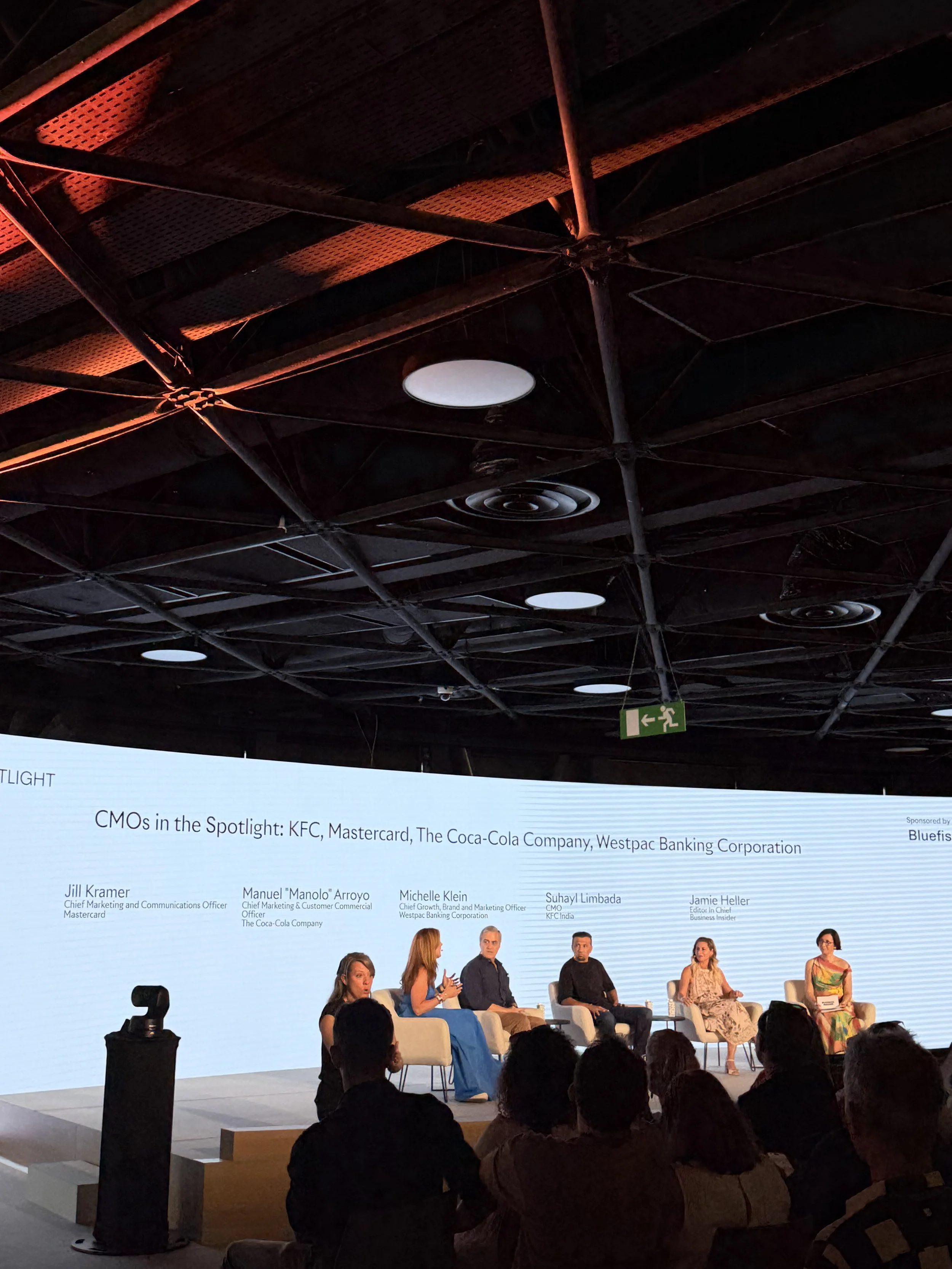
CMOs in the Spotlight
This CMOs in the spotlight was talking about how these large corporations organize campaigns. The panel reached a consensus of needing to plan your talent at least 3 months in advance, so you don’t feel rushed throughout the process, and the end goal reaches its highest potential. They also discussed something that I thought was interesting which was to start your briefs/presentations with something you know is right or that they will like, and then go into the more creative work. This was interesting to me because I don’t usually put as much thought into the order of a brief, but I understand the thought process behind why they think this is the superior way. The CMO of Westpac Banking CO said “data wins all arguments”, and that really stuck with me. Not only does it help to prove the point they were discussing earlier, but it is a good mindset to have. If you can’t find a source to back what you are trying to defend, it isn’t worth defending. Overall, I liked this CMO panel more than I was expecting to because it got me thinking about what life in the workforce is like when I am the one writing the briefs, and trying to defend my points.
KFC, Coca Cola, Mastercard, Westpac Banking Corporation
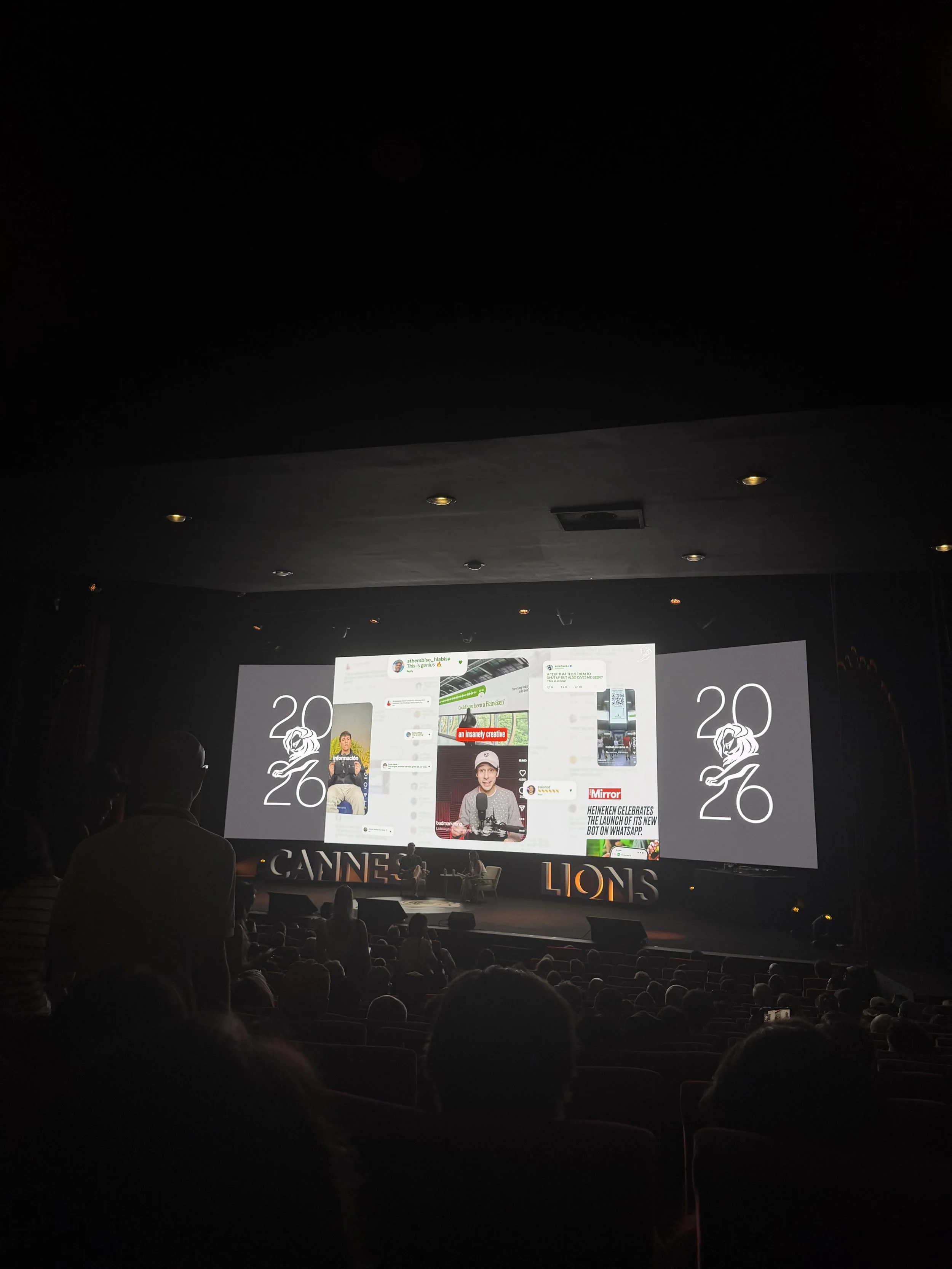
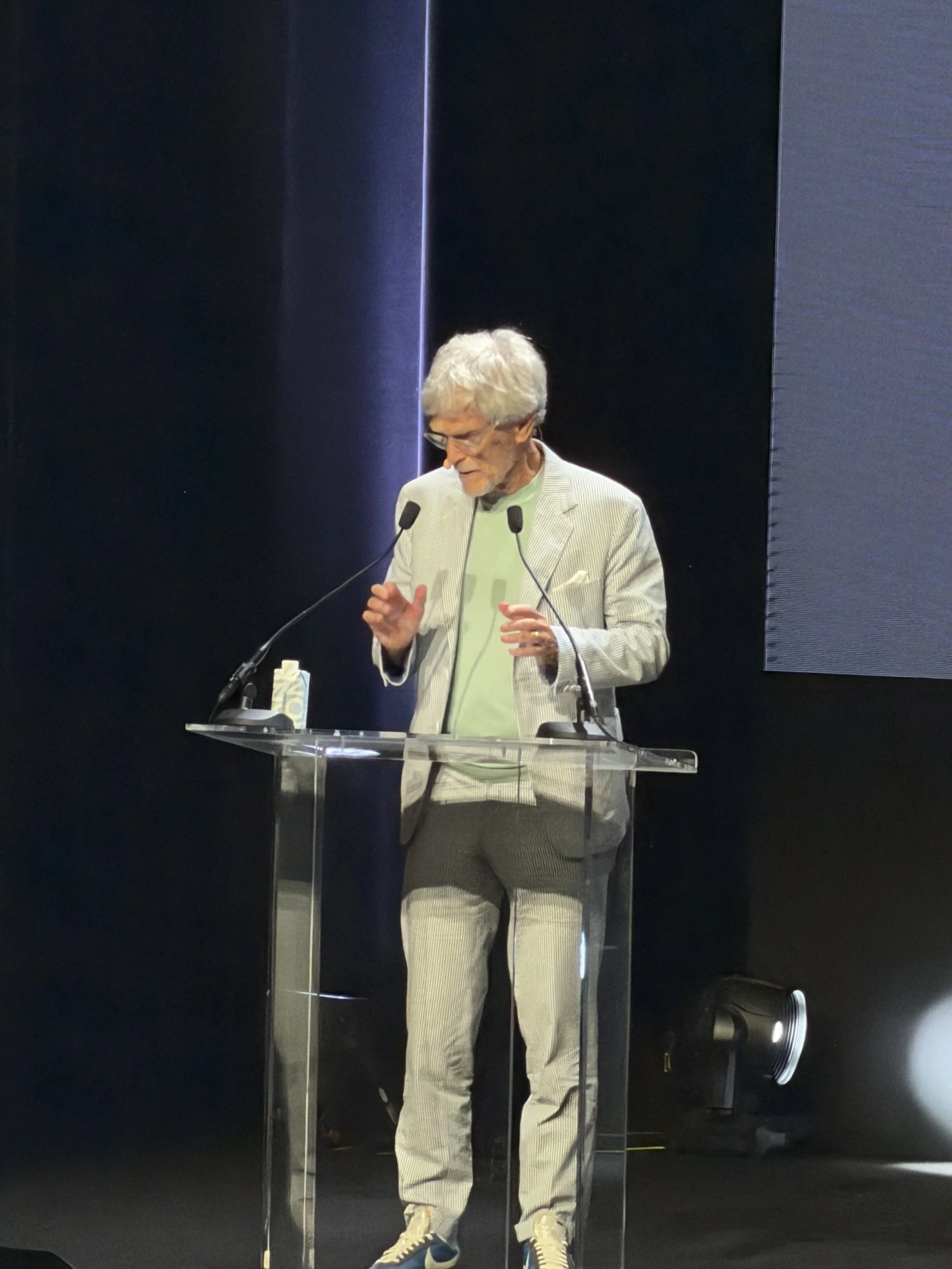
Sir John Hegarty Co-founder and Creative Director of The Business of Creativity
Stop Working in Advertising
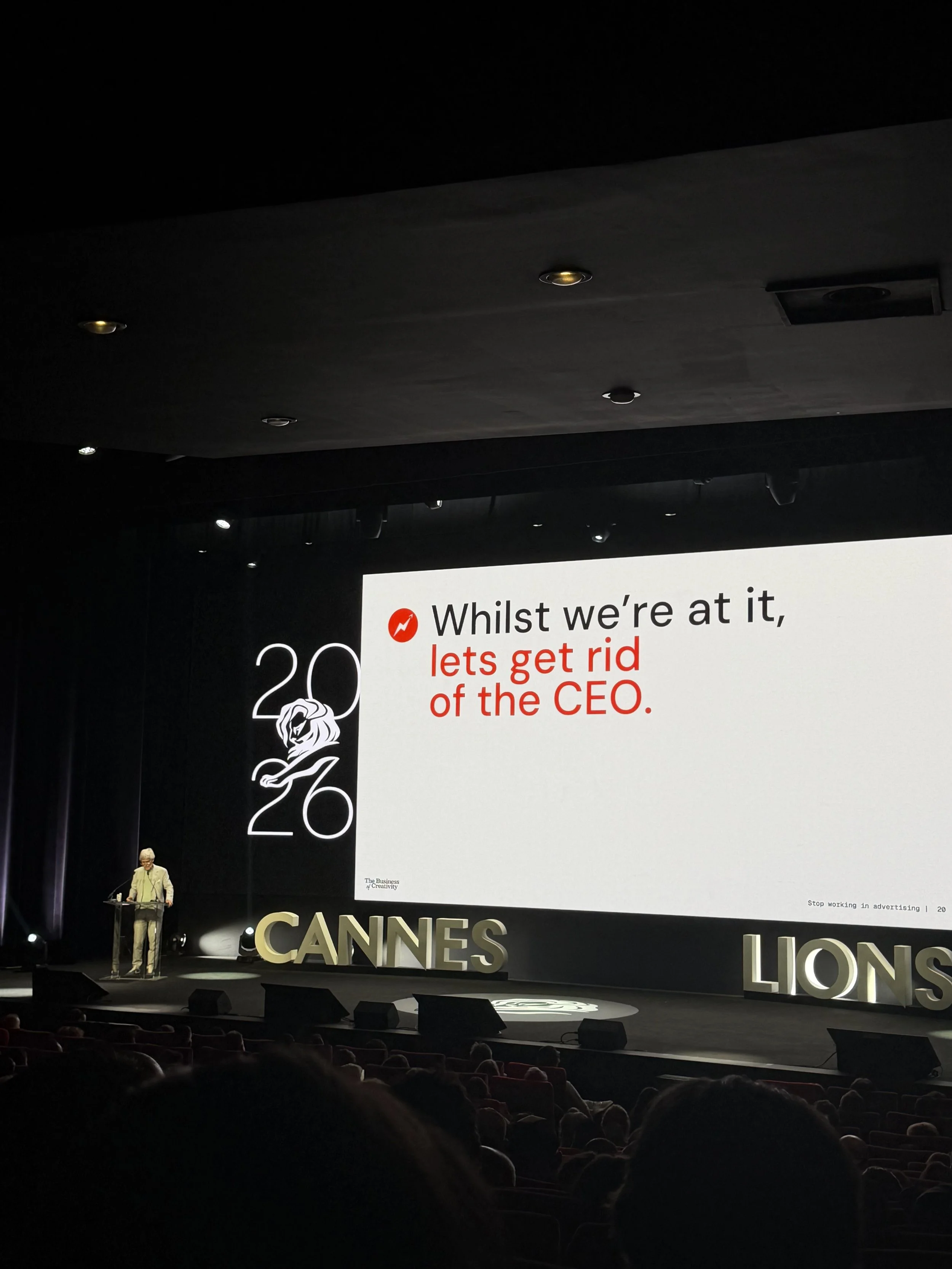
Sir John Hegarty is extremely well known in the advertising world, and was on our Who’s Who test on Sunday, so we made sure to get there early. It was so crowded in the theatre, they filled a second room where it was being streamed, and still had to turn people away!! He started by talking about our lack of growth because people are focusing on promotions and money over persuasion and creativity. In this new digital era, we focused so much on social media in previous years, Hegarty thinks we have forgotten other ways of digital media. He thinks the solution to this problem is having companies start to focus on the creative employees and place them at the top of the pyramid, otherwise we lose good ideas because they don’t have the power to push for them. The photo on the right that says lets get rid of the CEO is referring to something that Hegarty said “Lets replace CEO for Creative Executive Officer, not Chief Executive Officer”, referencing his belief of creativity being the most important thing for a company to prioritize. Overall, his talk was very thought provoking because it made me think about companies in a different way. If we have great managers, and everything is amazing except you have no good creative team, you will never succeed. I thought Sir John Hegarty made some great points, and it was super cool to see someone that so many people in the industry look up to speak about something he was so passionate about.
Jayson Tatum (NBA), Chris Koch (CEO at New Era Cap), Jeremi Gorman (CRO at Fanatics Advertising), Sarah Travis (EVP, Digital and Revenue Partner at Target ), Daniel Yaw Miller (Founder of Offball)
More than Merch: How Licensed Apparel Became a Language for Global Fandom
This talk was about how merchandise has transformed what it can represent in the eyes of the consumer. Merch now tells a story of a team, artist, or player you feel connected to. This connection is what is important because it drives customers to purchase, and then wear the merchandise out in public. They talked also about limited edition drops and collaborations are also successful because of the anticipation behind the drop, and the idea that there is a finite amount of the product. However, they also spoke about how some drops fail because the company fails to gain enough hype within the community, so they feel less of an urgency to purchase the product. Without an emotional connection, it’s harder to get the attention of consumers in such a saturated market like the fashion industry. They also talked about how athletes are no longer just athletes and brand endorsers, but they have become entrepreneurs. Athletes now have the most say they have ever had on the products, style, marketing, and all the things that go into building a brand. This makes them more valuable, because fans now follow them to their different partnerships and collaborations, generating more revenue. And because of that, the panel also talked about how merchandise is now meant to be worn everyday, so you can recognize fellow fans in the wild and build a connection. I enjoyed this talk because you got to understand the thought process behind how your favorite teams and brands create merchandise that I always feel like I neeeeed to have.
Alex Jenkins (Editorial Director at Contagious), Chloe Markowitz (Editor at Contagious)
The Festival Lowdown
The Festival Lowdown was a review of what won at Wednesday night’s awards show (which was nice because I left a little early to attend the Late Night with Netflix event!), and they talked a lot about how we can use AI, because we can no longer ignore it. They also spoke about the fact that technology can generate content, but taste, originality, and cultural insights are still at the human advantage. My favorite thing that was discussed was the Kit Kat commercial that won the PR Grand Prix the night before. It was about a shipment of Kit Kats went missing right before Easter, so their team turned to social media and created an online “Kit Kat tracker” and challenge. This went viral on platforms like Instagram, Tik Tok, and YouTube, and helped to generate so much natural word of mouth marketing for Kit Kat. They somehow turned what should have been a crisis before one of the biggest days in candy sales, but instead they figured out a way to make this a viral trend that customers could engage in and enjoy.
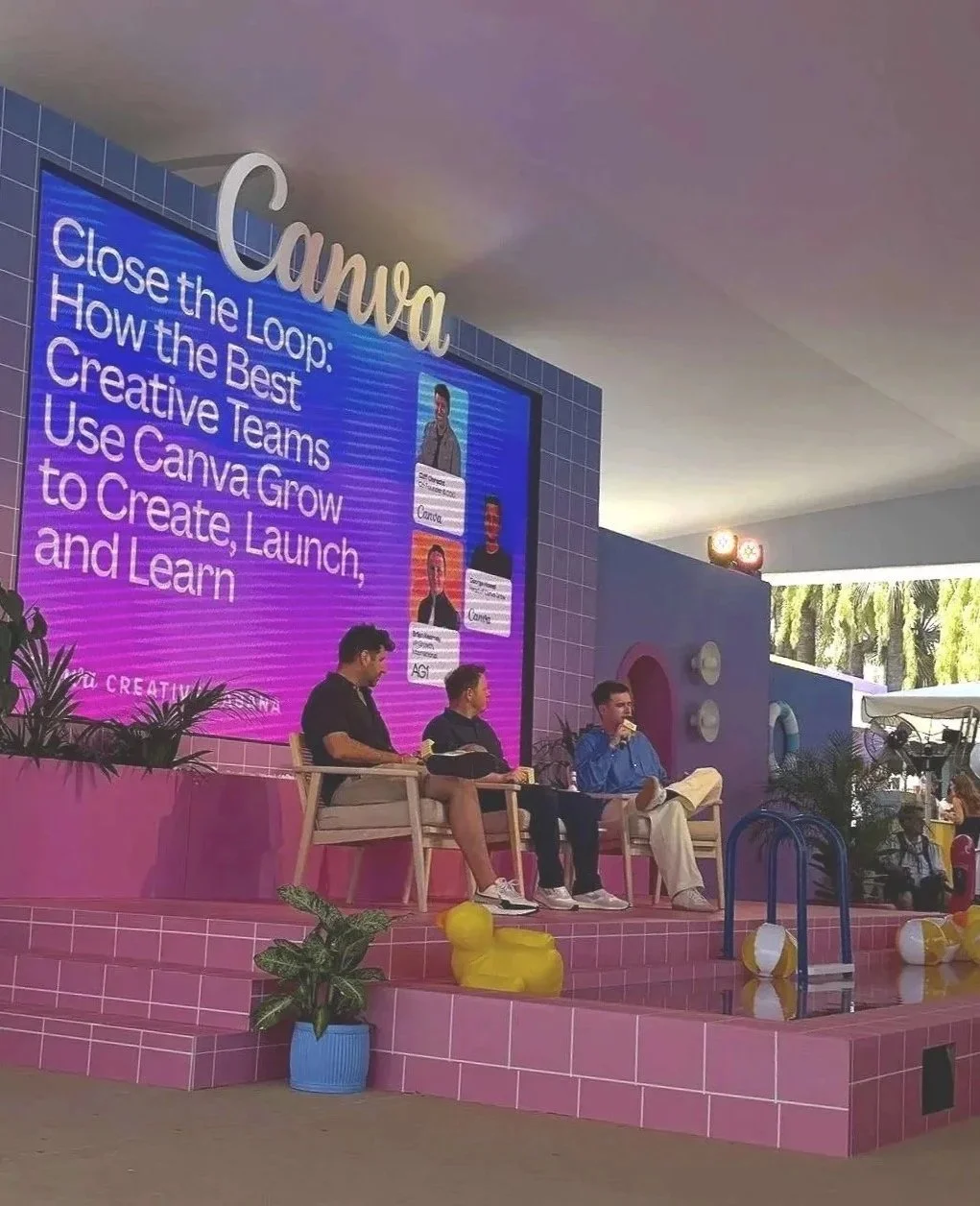
Chris Doody (Head of Growth at Canva), George Howes (Head of Canva Grow), Nirav Sheth (CMO at AG1)
Close the Loop: How the Best Creative Teams Use Canva Grow to Create, Launch, and Learn
In this talk, they talked about the new Canva Grow 2.0, a new AI powered platform designed to design, create, and analyze advertisements in one place. They talked about how one of the major problems was that marketers are spending too much time managing their different platforms, and not enough time on drafting new creative ideas. This was definitely a promotion for their new product, as they walked through a live demonstration and highlighted various features like an ad would. The platform can pull information from your website, help design the ad, publish it on social media, and then analyze its performance. This streamlines the process, and allows for you to see what ads are doing well, so you can implement parts of those in future advertisements. I thought this was a good idea for a platform, and I am interested in seeing how quick AI can help gather data to create better results faster.